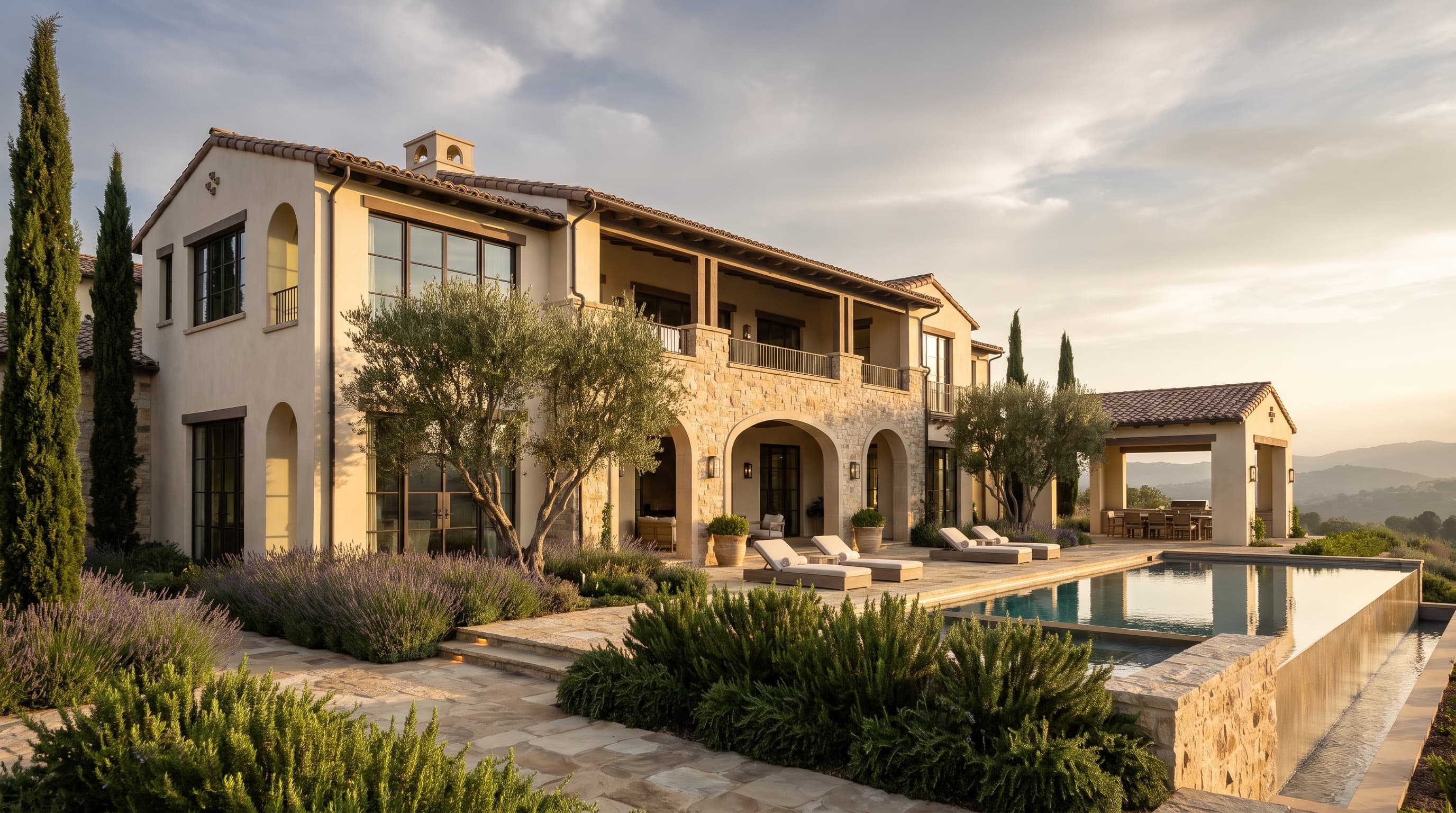
Change the building in a sentence.
Describe the revision in plain English. Onyx redraws the building, re-prices it, and renders the result before your client leaves the room.
Every architect knows the loop: design, present, watch the client squint at the drawings, revise, wait, repeat.
Each pass through that loop is two or three weeks gone — drafting time, a resubmittal, a client who was excited and is now just waiting. Renderings buy you one good meeting. The second the client says “what if we moved the kitchen,” you’re back at the start.
“I grew up watching this play out in two architects’ offices.” Read the story →
Type the change. Everything downstream moves with it — the model, the floor plans, the budget.
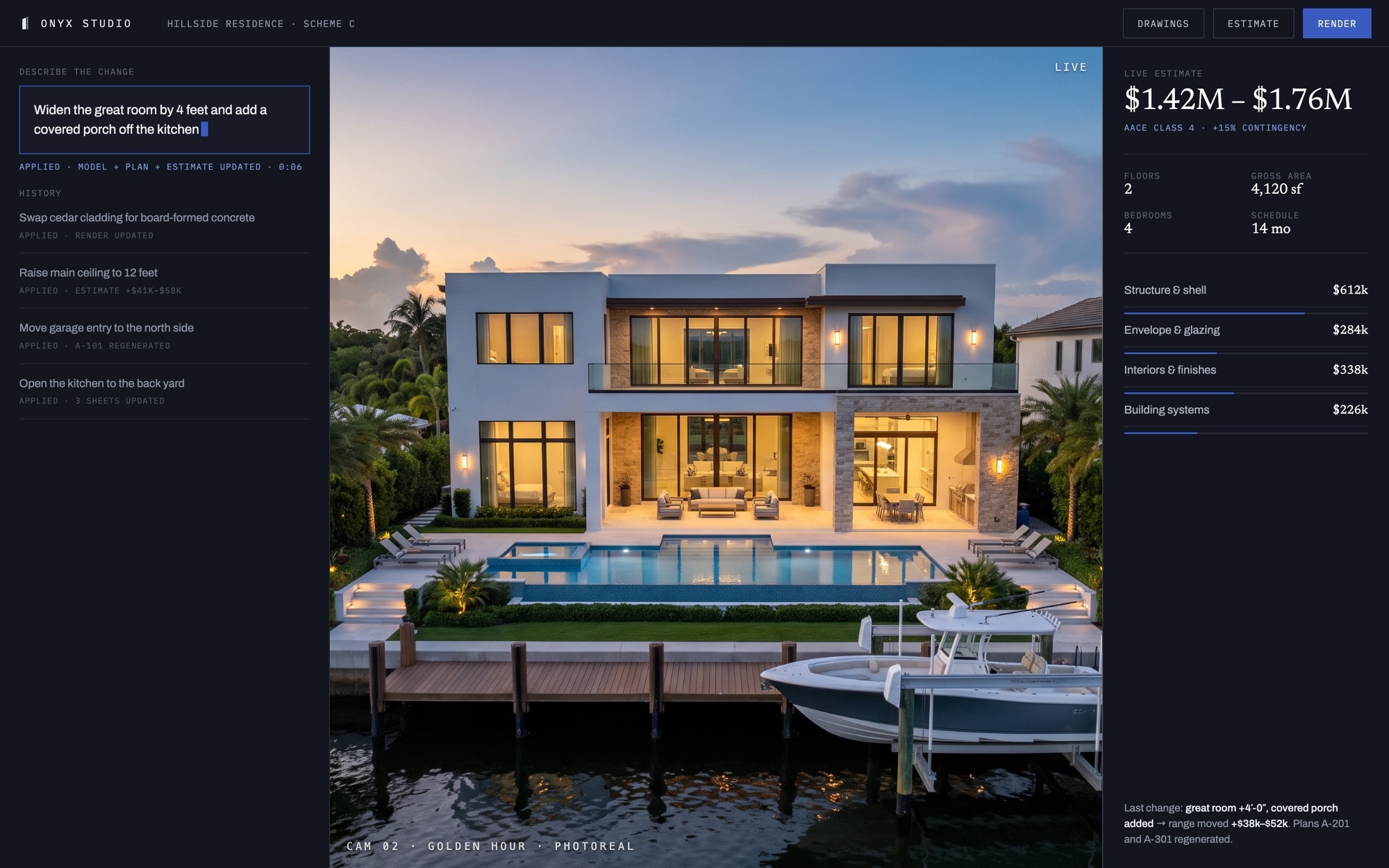
Interface previews. The studio is in active development — request access to see it live.
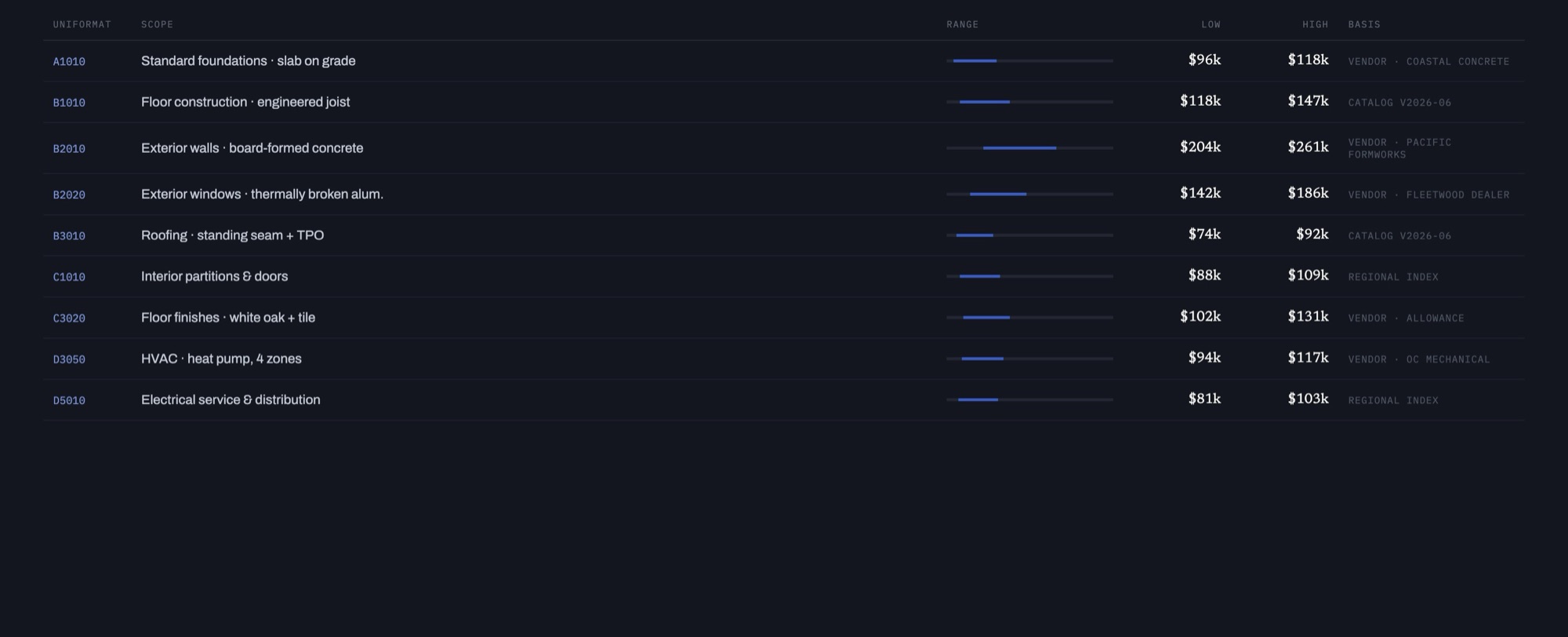
Onyx never invents a number.
Every construction cost estimate is an AACE-class-tagged range built from vendor pricing, with a basis of estimate you can hand to a lender. Change the design and the range re-computes. Actual math, not a model guessing.
The same model that renders your building drafts it.
Export design-development drawing sets — plans, elevations, schedules — directly from the browser.†
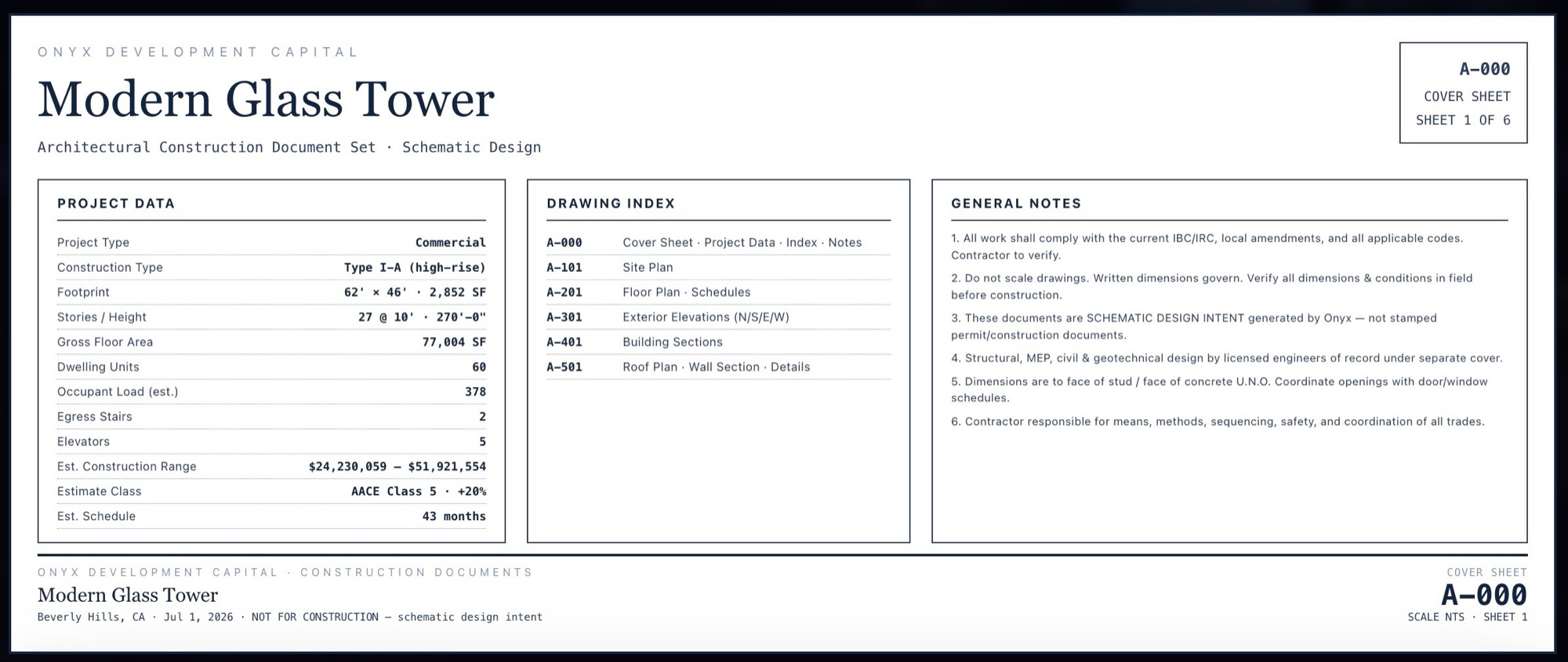
† Design-development grade. Drawing sets are marked “not for construction.”
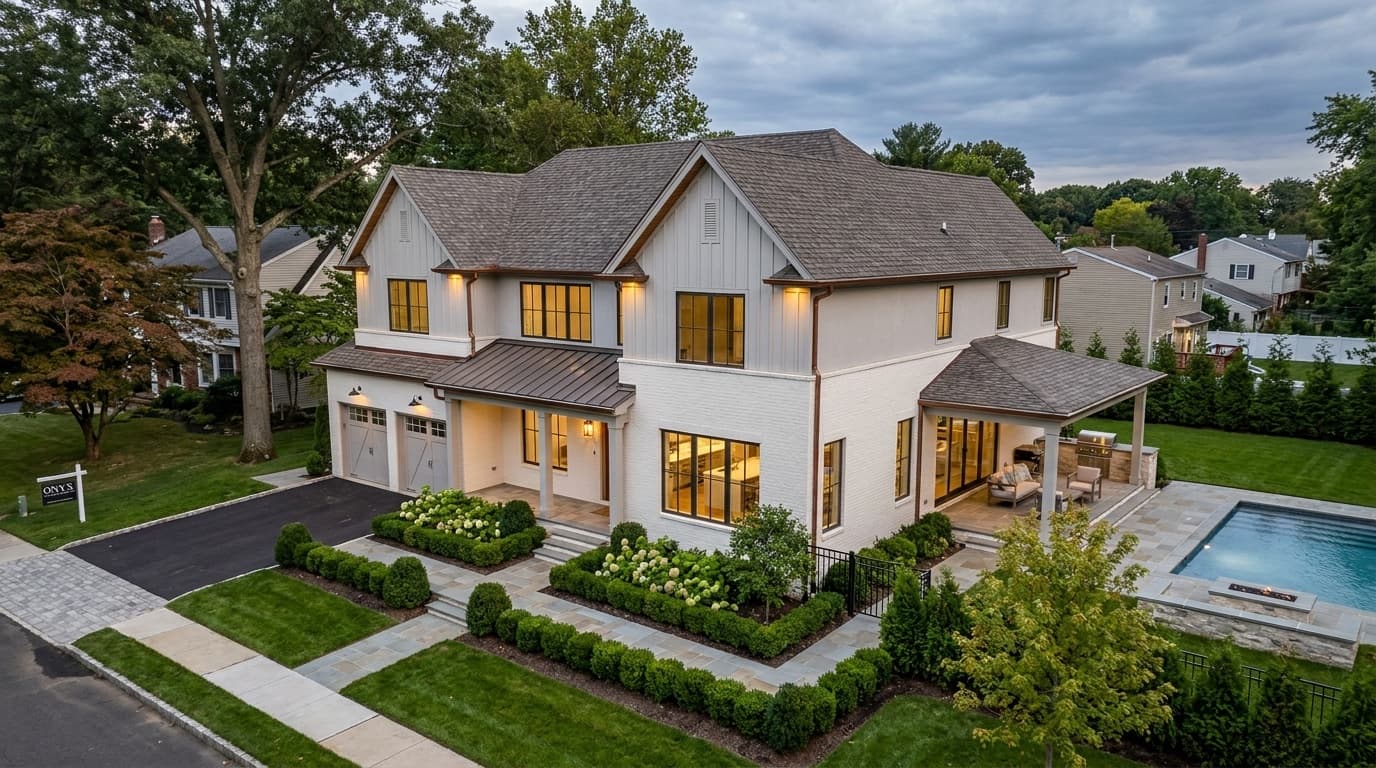
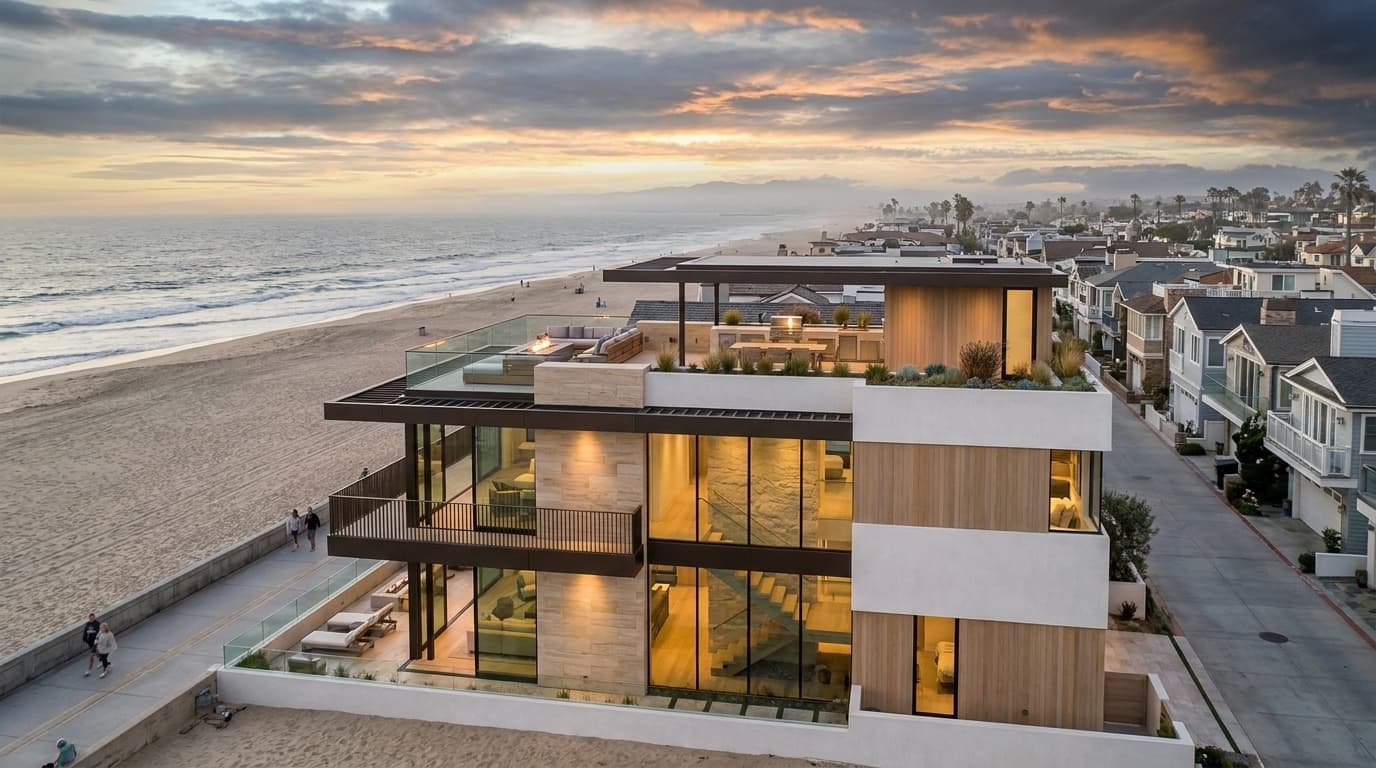
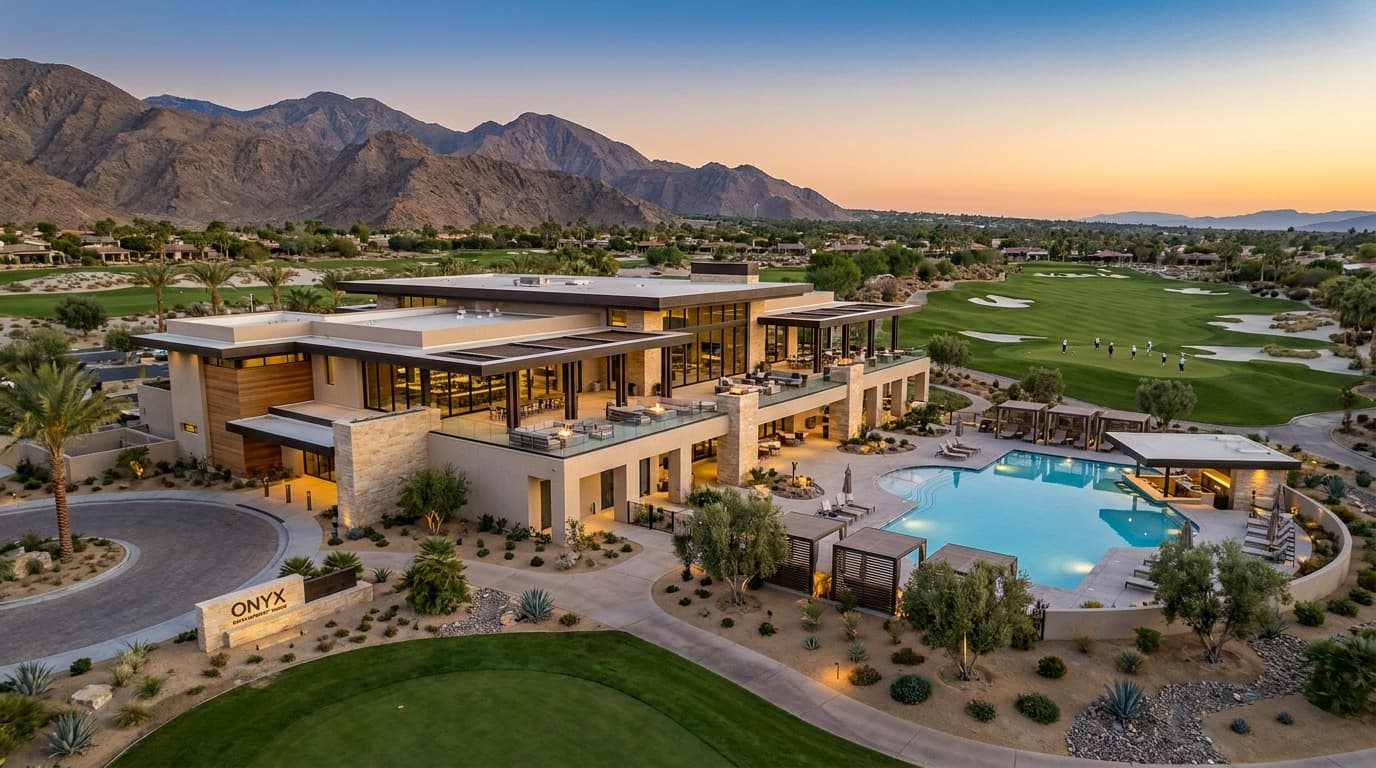
One parametric model, rendered in any architectural language.
Schematic-grade renders, generated directly from the parametric model.


“Both of my parents are architects. I spent my childhood around redlines and resubmittals. Onyx exists because the slowest part of their job was never the design — it was helping everyone else see it.”
Read the full story →Next: edit the photoreal rendering itself.
Walk the building, move a wall, and watch the drawings and the budget follow — pixel-streamed to the browser. We’re building it now. Waitlist members see it first.